
Mastering Visual Scan Techniques for Lane Change Preparation and Blind Spot Safety
Written by Staff Writer
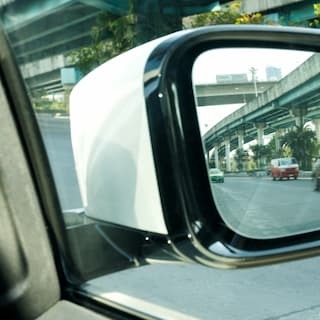
Before changing lanes, briefly look over your shoulder through the side window to check your blind spot. Mirrors may not reveal nearby vehicles, cyclists or pedestrians.
Blind Spot: Performing a Quick Shoulder Check Before Lane Changes
To perform a shoulder check, briefly turn your head and look over your shoulder through the side window. Keep the check quick so you can return your attention to the road ahead.
A shoulder check is essential because mirrors alone may not reveal all nearby road users, such as cyclists or pedestrians.
Follow these steps for an effective shoulder check:
Signal Your Intention
Always signal before changing lanes to alert other drivers.
Check Your Mirrors
Look at your rearview and side mirrors to assess traffic.
Perform the Shoulder Check
Quickly turn your head to look over your shoulder. Focus on identifying any vehicles that may be in your blind spot.
Maintain Control
Keep both hands on the steering wheel while checking. This helps you stay in control of your vehicle.
Proceed if Clear
If the lane is clear, safely change lanes.
The shoulder check should be a brief glance that does not take your attention away from the road ahead. This quick verification step is crucial for safe lane changes.
By incorporating shoulder checks into your driving routine, you enhance your awareness and reduce the risk of accidents.
Maintain a Steady Grip on the Steering Wheel for Blind Spot Checks
Maintaining a steady grip on the steering wheel is essential for safe blind spot checks. This practice helps you control your vehicle while checking for hidden vehicles. A firm grip prevents unintended steering movements during head checks. Below is a comparison of different techniques for checking blind spots while maintaining control.
Technique | Control Level | Time Required | Effectiveness |
Shoulder Check | High | 1-2 seconds | Very Effective |
Mirror Adjustment | Moderate | Initial setup only | Effective |
Combined Approach | Highest | 1-2 seconds + setup | Most Effective |
Pro Tip: Check the road ahead and your mirrors before briefly looking over your shoulder. Keep a steady grip on the wheel and avoid turning your entire body, which could cause you to steer unintentionally.
Adjusting Side Mirrors Outward to Reduce Blind Spot Areas
Adjusting your side mirrors correctly is essential for reducing blind spots. Properly set mirrors can help you see vehicles that might otherwise be hidden. To adjust your side mirrors, follow these steps:
- Adjust the left mirror: Lean your head to the window. Move the mirror until you just see your car’s edge.
- Adjust the right mirror: Lean toward the center console. Set this mirror so you can barely spot your car’s edge.
- Check the center mirror: Make sure it shows the full rear window. This helps shift your view smoothly from center to side views.
- Try a road test: Drive safely and practice checking your mirrors. Watch how other cars appear as they get closer.
- Adjust if needed: If blind spots remain, change the mirrors slightly for better views.
To minimize your blind spots, adjust your side mirrors outward until the sides of your vehicle are just out of sight, as recommended by the California DMV.
Remember, adjusting your mirrors is just one part of safe driving. Always perform a shoulder check before changing lanes. This ensures you have a complete view of your surroundings. By combining mirror adjustments with physical checks, you enhance your safety on the road.
In the United States, over 840,000 accidents occur annually due to blind spots. This highlights the critical importance of proper mirror adjustment and driver awareness. Research indicates that 36 percent of drivers fail to check their right-side mirrors or windows before changing lanes, significantly increasing collision risk.
Vehicles equipped with blind spot monitoring systems experience a 14% to 23% reduction in lane-change crashes compared to those without the technology. A height difference of just seven inches can cause a driver's blind spot to double in size, making proper mirror adjustment essential for all drivers.
A study found that a large driver-side blind zone increases the risk of striking a pedestrian during a left turn by 70%. Experimental research has shown that adding a circular convex blind spot mirror can increase a driver's field of view by up to 211%.
According to the National Highway Traffic Safety Administration, blind spots can account for up to 40% of the area surrounding a vehicle.