
What Is Tire Balancing and Why Is It Important?
Written by Anna Coucke | Edited by Michael Purser
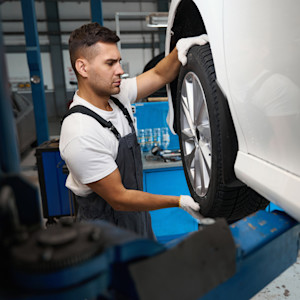
Many drivers never consider whether their wheels are properly balanced until their car makes it obvious that something is wrong. Maybe the steering wheel begins to shake on the highway, the ride feels rougher than it used to or the car just does not handle as smoothly at certain speeds.
Those small issues are easy to brush off, but they can point to a bigger problem that, if not addressed quickly, can cause unnecessary wear and damage to your vehicle.
If you want a smoother ride and fewer preventable repairs, here is what you need to know about balancing your tires.
What Balancing Your Tires Actually Means
Balanced tires evenly distribute the weight of the vehicle across all four tires and wheel assemblies. Even a small imbalance can cause the wheel to spin unevenly, especially at higher speeds.
Technicians can fix the issue by using a machine to find heavy spots, then adding small weights to the rim of the wheel to help it spin smoothly.
Balancing vs. Alignment
The distinction between balance and alignment can be confusing. If your car feels off, it can be hard to know whether you need your wheels balanced, aligned or both.
A simple way to think about it is this:
- Balancing fixes vibration caused by uneven weight distribution in the tire and wheel assembly.
- Alignment fixes wheel angles that affect how the vehicle tracks and how the tires contact the road.
If your steering wheel shakes at certain speeds, balancing is often the issue. If your car pulls to one side, the steering wheel is off-center, or the inside or outside edges of the tires wear unevenly, improper alignment is likely the cause.
Sometimes both issues are at play. For example, if you hit a deep pothole, you could knock the wheels out of balance and affect alignment at the same time.
How Wheels Get Out of Balance
Wheels don’t stay perfectly balanced forever. Regular driving slowly changes the condition of the rubber and wheel assembly. Some situations can throw things off faster than others.
A few of the most common causes include:
- Normal tread wear over time
- Hitting potholes, curbs or speed bumps
- Driving regularly on rough roads
- Installing new tires or repairing a flat
- Losing a wheel weight
- Mud or snow building up inside the wheel
Even if you drive carefully, normal wear alone can be enough to create an imbalance. That is why balancing should be part of routine maintenance, not something you only address after a problem appears.
Signs Your Wheels Need to Be Balanced
The signs that you need an adjustment can be subtle at first, slowly growing more obvious over time. It’s important to recognize when something is off before it causes more damage.
Here are the most common signs that something is off:
- The steering wheel vibrates, especially at highway speeds
- You feel shaking in the seat or floorboard
- The ride feels rougher than normal
- Your tires show uneven tread wear
- The car feels less stable at certain speeds
These symptoms are easy to ignore at first, especially if they come and go. But it is critical to take them seriously the moment you recognize them.
Imbalance rarely fixes itself. The longer you drive that way, the more likely you are to accelerate the wear of your tires or put extra strain on suspension and steering parts. Eventually, that could lead to component failure or even a breakdown.
How Often Should You Balance Tires?
For most vehicles, have your wheels balanced every six months or 5,000 to 6,000 miles as a general rule of thumb. Some models may need more frequent checks, especially those with very wide or low-profile wheels. Check your owner’s manual for the recommended interval for your vehicle.
Many shops recommend having your tires balanced at the same time they are rotated. You save an extra trip to the shop, and the two work well together to promote even wear and a smoother ride.
That said, there are times when you shouldn’t wait for the next scheduled service, including when:
- You install new tires
- You repair or replace a tire or remount it on a wheel
- You hit a pothole or curb hard
- You notice vibrations while driving
- You see unusual tread wear
These situations can throw off the balance much sooner than a normal service interval.
Why Regular Tire Balancing Matters
Balance may not sound like a big deal, but you can feel the difference when it is done right. Beyond helping your car ride more smoothly, it also keeps your tires wearing evenly and takes extra stress off your suspension and steering systems.
Overall, your car should feel steadier, more predictable and more comfortable on the road.
What Happens During Tire Balancing
If you have never had the service done, it is a pretty straightforward process.
- A technician removes the wheel and puts it on a balancing machine.
- The machine spins the wheel and shows any abnormalities.
- The technician then adds small weights to the rim, if needed, to correct the imbalance.
- The wheel is checked again to make sure it spins evenly.
It is usually a quick service, especially when it is done during other tire maintenance or replacement. In many cases, it fits easily into a routine maintenance visit without adding much extra time.
What Happens if You Ignore Tire Balancing
Like any neglected maintenance, this can quickly turn into a bigger expense. Here are some of the problems that can follow:
- Premature tread wear
- Reduced ride comfort
- Less precise road feel
- Extra strain on suspension components
- More wear on steering parts
That is why it makes sense to keep up with balancing on schedule. It is a small service, but it can help you avoid more expensive repairs and early tire replacement down the road.
Additional Routine Wheel Maintenance
To make things simpler, include balance as part of a broader tire maintenance routine. Here’s everything you should include:
- Check tire pressure once a month. Use a gauge to make sure each one is at the recommended pressure, which you can find listed on a sticker inside your driver’s side door or in your manual. Pressure that is too high or too low can negatively affect handling, tread wear and fuel economy.
- Rotate on schedule. Regular rotations help tread wear more evenly and extend life.
- Inspect tread and sidewalls. Look for cracks, cuts, bulges, nails or other visible damage that could lead to failure.
- Watch for uneven wear patterns. Wear on one edge or patchy tread can point to issues with pressure, balance or alignment.
- Check alignment when something feels off. If the vehicle pulls to one side, the steering feels uneven or the ride seems less stable, improper alignment could be the issue.
- Follow your owner’s manual. Your manual gives the recommended service intervals for your specific vehicle, and those guidelines are worth following.
Frequent checks and inspections usually only take a moment and can save you hundreds or even thousands of dollars on repairs resulting from neglect.
A Little Maintenance Goes a Long Way
Prioritizing the balance of your tires in your maintenance routine can make a real difference in how your car feels day to day. When you stay on top of it, you are more likely to catch small issues early, avoid unnecessary wear and keep your vehicle driving the way it should well into the future.
If you want to build even better driving habits, SafeMotorist’s drivers ed and defensive driving courses can help prepare you for whatever the road throws at you.
Whether you are a new driver building basic driving skills or a seasoned driver looking for a refresher, SafeMotorist has a course to meet your needs.
Frequently Asked Questions
Do new tires need to be balanced?
Yes. New tires should always be balanced when they are installed. Even brand-new tires can have slight weight differences that need correction.
How long does balancing take?
It is usually a quick service, especially when combined with tire rotation or installation. The exact time depends on the shop and whether the technician finds other issues. It rarely takes longer than a few minutes.
Can unbalanced wheels damage my car?
Yes. Over time, they can cause uneven tire wear and place extra stress on supporting vehicle systems.
How much does balancing cost?
Prices vary by vehicle, tire type and location, but it is much less expensive than putting it off replacing tires early or repairing wear-related suspension issues.
Can I balance wheels myself?
Most drivers should leave this maintenance item to the pros. Achieving proper balancing requires specialized equipment that can detect very small irregularities. Without that equipment, you are mostly guessing.