
How to Drive Defensively and Avoid Common Road Hazards
Written by Staff Writer | Edited by Michael Purser
Every drive is full of factors outside your control. You spend a lot of your time behind the wheel surrounded by the unexpected. Another driver might run a red light. A storm could roll in halfway through your commute. The best way to protect yourself from road hazards is to drive defensively.
That doesn’t mean you should be jumpy at the wheel. Quite the opposite; defensive driving techniques can help you stay calm and collected even when facing bad weather, dense traffic or unexpected danger. This guide includes helpful defensive driving tips for your next trip.
Proactive Driving
Reactive driving is inherently dangerous. If you only respond to hazards after they appear, you may leave yourself less than a second to respond effectively. There’s just not a lot of room for error when the vehicle in front of you unexpectedly slams on the brakes at highway speeds.
Proactive driving means thinking ahead. By watching for trouble before it starts and staying aware of your environment, including your vehicle’s blind spot, you give yourself more time and space to avoid any threat.
When you keep in mind that other motorists are also humans, who are prone to mistakes and lapses in judgment, you are more likely to notice the car next to you drifting out of its lane or catch a glimpse of the brake lights shining three cars up the line.
Core Habits for Safer Driving
Like any sturdy structure, safe driving starts with a strong foundation. Getting the basics right is the most important part of building habits that will protect you for the rest of your driving career.
Maintain Your Space Cushion
A space cushion is the open area around your car. While the space in front of you matters most, your cushion includes clearance in every direction. Protecting a comfortable bubble of personal space gives you room to maneuver if something goes wrong.
To check your following distance, pick a fixed object like a sign or tree. When the vehicle ahead passes it, count the seconds until you reach the same spot. Aim for at least three seconds of space. Add more space in bad weather or when you're behind a large truck.
Try to leave plenty of space on each side, too. Lateral space prevents you from getting boxed in and gives you an escape in an emergency. Ease off the gas and let tailgaters pass instead of speeding up to free up your rear cushion.
Look Ahead
Keep your eyes moving. Look far down the road, beyond the car in front of you. Check your mirrors every few seconds so you always know what's behind and beside you.
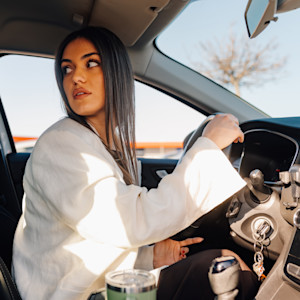
Don’t just rely on your mirrors when changing lanes. Turn your head to look over your shoulder before merging. Every vehicle has blind spots that mirrors can't cover. Blind spot checks help you keep an eye out for threats your mirrors might not catch.
Signal Early and Drive Predictably
Other drivers can't read your mind. Use all the tools at your disposal to let nearby motorists know what you plan to do. Activate your signal a few seconds before changing lanes or turning.
Then follow through in a smooth, confident, controlled maneuver. No sudden moves. Brake gradually, don’t weave through traffic. Predictability is safety. Nobody likes surprises at 60 mph.
The Right Speed
A speed limit is the top safe speed under ideal conditions. Weather conditions like rain or snow may call for a slower pace. Reduce your speed to compensate for reduced control. Pay attention to traffic that may make it impossible to travel at the posted speed. Be patient and wait for obstructions to clear.
Driving too fast for the situation at hand can be deadly. Speeding was a factor in 29% of U.S. traffic deaths in 2023, according to the National Highway Traffic Safety Administration.
Leave a few minutes early to prevent the urge to speed. It can be hard to maintain good driving habits when you're running late. But you’ll be much later for your appointment if you end up in the back of an ambulance or a police cruiser.
How Can You Handle Today's Driving Challenges?
Technology can improve safety and save lives. But a high-tech driving environment also creates new problems you need to manage to reach your destination safely.
Phones and In-Car Technology
Touchscreens and phones can be helpful, but they also pull your eyes away from the road. Anything that takes your attention off the task at hand is a hazard. Set your route and pick your music before you start driving. Then put your phone out of reach or turn on focus mode. If you need to make a call, pull over somewhere safe first.
Electric and High-Torque Vehicles
Electric vehicles (EVs) and high-performance vehicles accelerate shockingly fast — much faster than older gas-powered models. These responsive designs require a soft touch on the accelerator. Flooring it in a moment of panic is much more dangerous with that much torque at your disposal.
EVs are also very quiet at low speeds. People walking or biking nearby may not hear you coming, so take extra care when moving through parking lots and neighborhoods.
Driver-Assist Features and Self-Driving Cars
Modern vehicles are packed with features designed to warn you, or even subtly influence your speed or steering, when you drift out of lane or approach obstacles. But these systems are designed to assist you, not replace you. Stay alert! Keep your hands on the wheel at all times. You must always be in control, because you will be held responsible for anything that happens while using assistive driving.
In some cities, you may also share the road with driverless taxis or test vehicles. Give them the same space you'd give any other driver, and don't assume they'll react the way a person would. Exercise more caution, not less, around driverless cars.
Weather-Specific Advice
You can’t always choose a mild, sunny afternoon for your drive. Sometimes you have to brave the elements. Here’s some advice to get you through inclement weather.
Fog
Fog can substantially reduce your view of the road. If you hit fog, slow down and use your low-beam headlights. Turning up the brightness actually worsens your visibility. The water particles that make up fog act like tiny prisms that will reflect your high beams.
If you can barely see, the National Weather Service recommends pulling into a safe spot, like a parking lot or rest stop, and turning on your hazard lights until the mist dissipates.
Ice
Ice is most dangerous when you can't see it. Black ice is nearly invisible and forms in the early morning and on bridges and overpasses, which freeze before the rest of the road.
Gently slow down before reaching these high-risk spots. Brake carefully and avoid sudden turns. If you start to slide, steer in the direction the rear of the vehicle is swinging to regain control. Jerking the wheel and slamming on the brakes will cause you to lose control completely and may result in a catastrophic collision.
Sudden Storms
Heavy rain makes roads slick and can hide lane markings. A drizzle may turn into a cloudburst without warning. If conditions suddenly worsen, turn on your headlights and slow down. If you can't see through the rain, pull off and wait out the storm.
Never drive on a flooded roadway. Water that looks still or shallow may be much deeper or may be moving much faster than you think. It only takes a couple of inches of water to stall your engine or carry your car away.
Build Safer Habits with SafeMotorist
Good habits take practice, but a structured education helps. SafeMotorist offers high-quality online defensive driving courses you can take at your own pace from any internet-connected device.
Many states and insurance companies offer discounts to drivers who finish an approved defensive driving course. New York drivers who complete an NYS DMV-approved course get a mandatory 10% discount for three years.
Rules and savings vary by state and insurer. We can help you figure out what to expect, generally speaking, when looking for a defensive driving discount. Contact your insurer or local department of motor vehicles for more information about your specific situation.