
The Ultimate Guide to Conestoga Trailers: Benefits & Uses
Written by Anna Coucke | Edited by Michael Purser
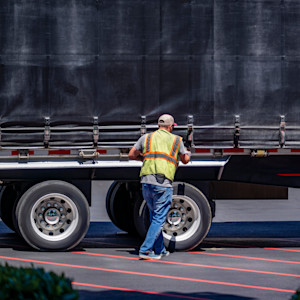
Not every load fits neatly on a traditional flatbed or inside an enclosed trailer. Some shipments are too large, too tall or too awkward to move through standard rear doors but still need protection from the weather while in transit.
Fortunately, there is a third option that provides both loading flexibility and protection from the elements — the Conestoga trailer.
What Is a Conestoga Trailer?
Also called a retractable or rolling tarp trailer, this is basically a covered flatbed with a tarp system built into a hard-shell frame. The cover slides open like a curtain to allow loading and unloading, then closes to cover the freight for the trip. This gives you the accessibility of an open-deck trailer while protecting cargo from weather and road debris during transit.
When moving freight through different delivery environments or using a less-conventional loading process, a Conestoga can make the job easier. The flexible design can help crews keep freight moving efficiently at every step, from pickup through final delivery.
Inspired by the Conestoga wagons used to carry pioneers across early America, these trailers evolved with modern technology to meet modern shipping needs.
Benefits of Rolling Tarp Trailers
These trailers bridge the gap between a standard flatbed and a dry van, a practical option for many types of freight.
They offer multiple advantages over other styles, including:
- Flexible loading. Unlike enclosed dry vans, which are usually loaded from the rear at a dock, Conestoga trailers can be loaded from the side, rear or even the top. This makes them easier to maneuver into position at irregular locations such as jobsites and yards.
- Fast, efficient access. Conestogas can reduce the logistical challenges that come with oversized or irregular cargo and cut down on the time and effort required for manual tarping.
- Better cargo protection than a standard flatbed. The retractable tarp system and frame help shield contents from rain, sun exposure, snow and road grime while keeping the cargo easily accessible.
For shippers balancing protection and accessibility, Conestoga trailers are among the most versatile options.
Common Uses and Shipping Needs
Conestoga trailers show up in many industries, including construction, manufacturing, agriculture and automotive shipping because they can handle large, heavy or awkwardly shaped cargo without exposing it to weather or road debris.
They frequently transport:
- Construction materials. This includes steel beams, lumber, pipe, wall panels and other oversized building products that may be unloaded piecemeal as needed on site.
- Manufacturing equipment. Computer numerical control (CNC) machines, industrial parts and other high-value machinery benefit from added protection during transit.
- Agricultural equipment and supplies. Conestogas can transport tractors, attachments, parts and other farm-related freight that may be difficult to load into a traditional enclosed trailer.
- Automotive freight. Vehicle components, assemblies, machinery and specialty equipment require open access for loading but still need protection from the elements when on the move.
This is just a sample of the range of cargo that these versatile trailers excel at hauling.
Types of Conestoga Trailers
These trailers are available in several styles. The main difference lies in how much height and weight each can handle.
Conestoga Flatbeds
This is the standard option and the most common choice for general freight. Flatbeds are best for loads that fit within standard height limits, typically around 8 feet 6 inches, and they usually offer the highest payload capacity of the three styles.
For freight that does not require extra vertical clearance, a flatbed Conestoga is the most practical fit.
Step Deck Conestogas
The step deck model, also called a drop deck, has two deck levels. This style is designed for taller cargo that would exceed the height limit of a standard flatbed. The lower deck provides additional vertical clearance, allowing freight up to about 10 feet 2 inches tall, though they generally carry slightly less weight than flatbeds.
This makes for a good middle-ground option when you need more height without moving to a more specialized trailer.
Double Drop Conestogas
If a step deck isn’t tall enough, the double drop style offers the most vertical clearance due to a lowered center deck between the axels. They are typically used for very tall freight that cannot fit on a flatbed or step deck, with legal height reaching about 11 feet 6 inches.
That extra clearance usually comes with a lower payload capacity, so they are best suited for loads for which height is the main concern.
Take Your Next Step
In trucking, there is rarely a one-size-fits-all solution. Different cargo calls for different equipment.
Knowing when to use each tool at your disposal will make you a better, more effective transportation professional.
If you are ready to find out more about trucking, SafeMotorist can help. Explore SafeMotorist’s state-approved CDL course offerings to find a program that fits your goals and get started on the path toward a commercial driving career.